Die-cut sticky notes offer instant brand recognition by shaping the pad into a company mascot, coffee cup, speech bubble, geometric icon, or product silhouette. However, die-cutting multi-layer adhesive pads requires strict attention to blade draft angles and adhesive strip alignment.
Engineering Advice
Always maintain a flat or gently curved anchor boundary of at least 30mm width where the adhesive strip sits. Avoid sharp 90-degree internal corner cutouts, which create stress concentrations that can tear paper when peeling individual sheets.
1. The Manufacturing Process for Die-Cut Sticky Notes
- Sheetfed Printing: Offset printing of logos, watermarks, and gridlines on 80gsm FSC-certified woodfree parent sheets.
- Pattern Adhesive Coating: Precision stripe coating of micro-sphere water-based adhesive, followed by non-destructive drying.
- Stack Collation: Automatic collation into exact sheet count blocks (25, 50, or 100 leaves).
- Die-Cutting: Precision hydraulic punching using custom-forged steel die blades that slice cleanly through 50–100 sheets in a single downward stroke without tearing or adhesive migration.
2. Key Artwork Rules for Custom Dies
| Design Parameter | Recommended Value | Why It Matters |
|---|---|---|
| Bleed Margin | 3.0 mm (0.12 in) past cut line | Prevents white paper slivers if blade shifts ±0.5mm |
| Safe Text Area | 4.0 mm inside cut boundary | Guarantees text and icons will not be clipped |
| Minimum Radius | R = 3.0 mm on corners | Eliminates sharp needle-point tips that bend during transit |
| Adhesive Anchor Width | >= 25 mm straight edge | Ensures sheets remain attached to pad spine prior to peeling |
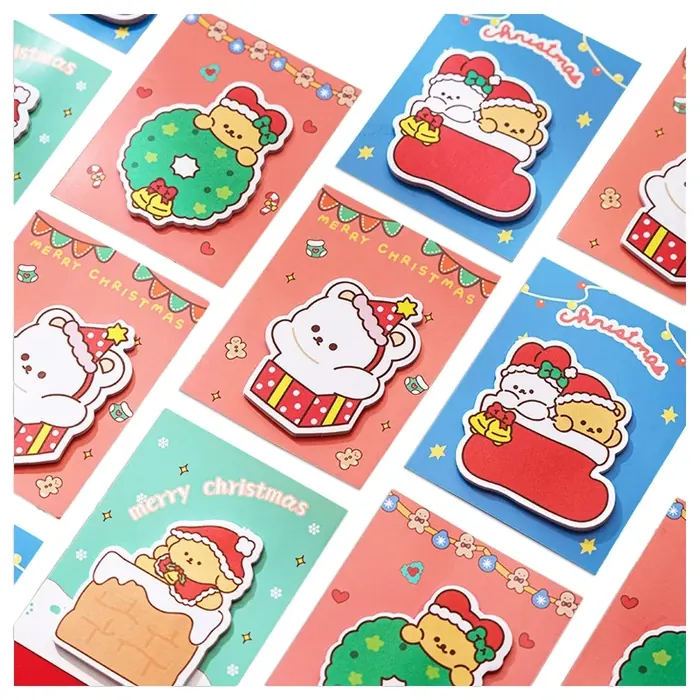
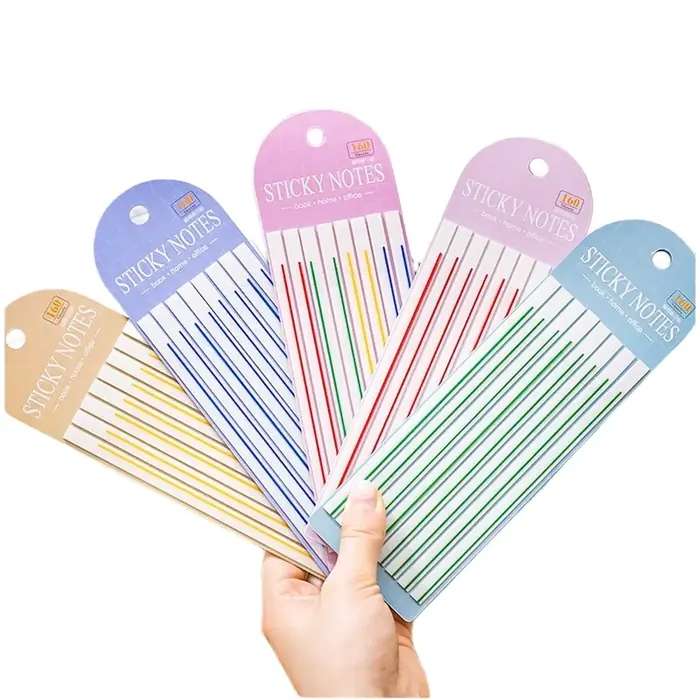
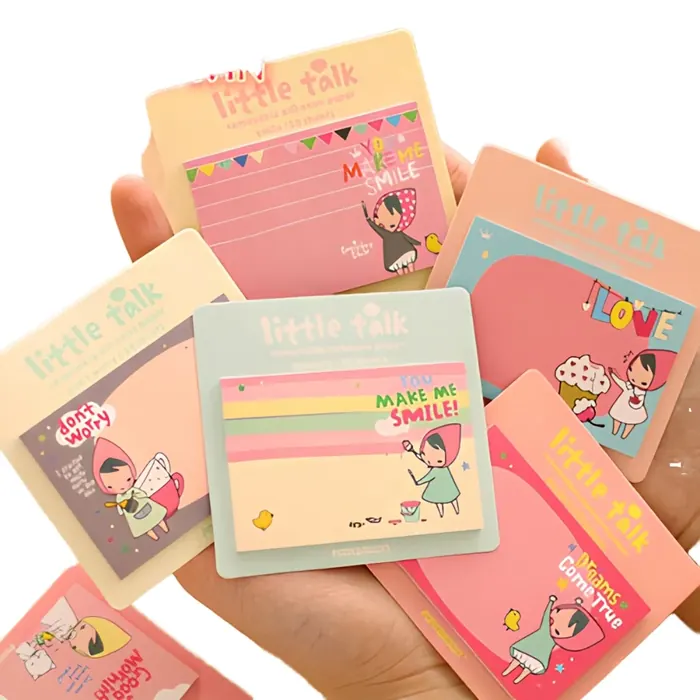
Featured reference designs related to this guide
Frequently Asked Questions
How are custom shaped sticky notes cut in bulk production?
After offset printing and adhesive coating, the collated paper stacks are die-cut using custom high-precision steel-rule or forged carbide dies under hydraulic punch presses.
Where must the adhesive strip be positioned on a shaped sticky note?
The repositionable adhesive strip must always align with a flat or gentle convex edge of at least 25mm to 35mm width so the sheets remain anchored together in pad form.
What is the tooling fee and lead time for custom die molds?
Standard steel-rule die tooling typically costs US$40 to US$80 depending on contour complexity, with mold fabrication completed in 2 to 3 working days.
Ready to discuss your custom paper product?
Send your artwork files, target dimensions, and quantity requirements to our Dongguan engineering team. We provide rapid digital proofing and formal factory quotations within 24 hours.