Sticky notes and memo pads are the twin workhorses of corporate desktop branding. While both deliver persistent logo impressions on customer and employee desks for months, their manufacturing processes, adhesive chemistries, and user interaction models differ fundamentally.
Procurement Rule of Thumb
Choose Custom Sticky Notes when the end-user needs to post reminders on computer monitors, document folders, and planner pages. Choose Glued Memo Pads when providing desk scratch pads for call logging, to-do list ticking, or hospital/hospitality message taking at higher sheet volumes for lower unit cost.
1. Structural & Chemical Distinction
Custom Sticky Notes (Repositionable Adhesive Strip)
True sticky notes use micro-sphere acrylic adhesive coated in a precise band (typically 12mm–18mm wide) along the top edge of each sheet. When pressed onto glass, plastic, paper, or painted metal, the adhesive spheres compress and hold firmly; when peeled, they release cleanly without paper fiber tear or sticky residue.
- Key advantage: Mobility. Notes travel from desk to monitor, document, or refrigerator.
- Sheet count constraints: Usually 25, 50, or 100 sheets per pad. Thicker stacks risk adhesive curl or warping if exposed to high ambient humidity during storage.
Glued Memo Pads (Non-Adhesive Tear-Away Sheets)
Printed sheets are collated, compressed under hydraulic pressure, and edge-coated along the head with a flexible synthetic padding compound. The back of the pad is reinforced with a 1.0mm–1.5mm greyboard chipboard backer.
- Key advantage: Ease of tear-off and zero adhesive curl. 100% of the reverse side remains completely usable.
- Form factor flexibility: Can be produced in miniature 50x50mm cubes up to giant A3 desk planning blotters with 50 sheets.
2. Sourcing Comparison: Sticky Notes vs. Memo Pads
| Factor | Repositionable Sticky Notes | Glued Tear-Away Memo Pads |
|---|---|---|
| Adhesive Chemistry | Removable water-based micro-sphere glue | Non-adhesive (Head padding glue only) |
| Standard Sheet Counts | 25, 50, 100 sheets | 30, 50, 100, 250, 500 sheets |
| Production Cost per Pad | Higher (Adhesive coating & release line) | Lower (Standard printing & padding) |
| Reference Factory MOQ | 1,000 pads | 1,000 pads |
| Die-Cut Shapes | Available (custom tooling required) | Available (die-cut outline) |
| Backing Options | Thin paper backing or rigid card cover | Rigid 1.2mm greyboard chipboard |
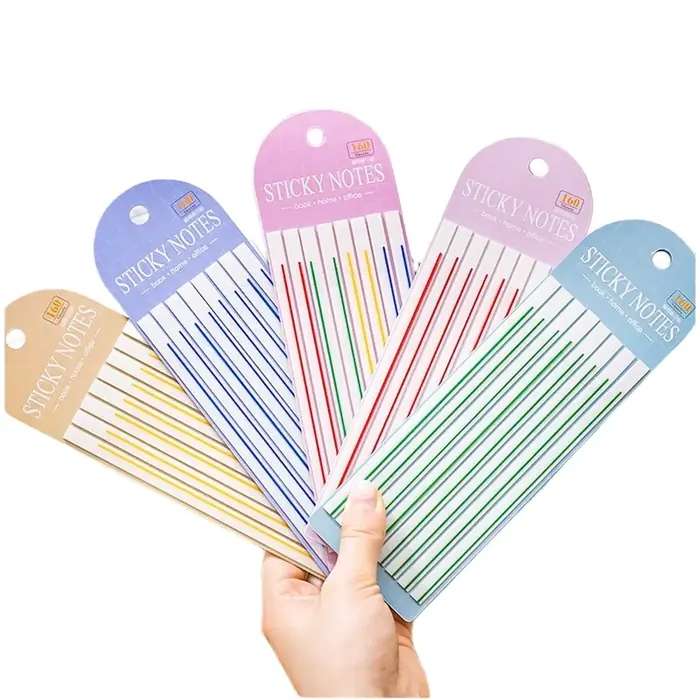
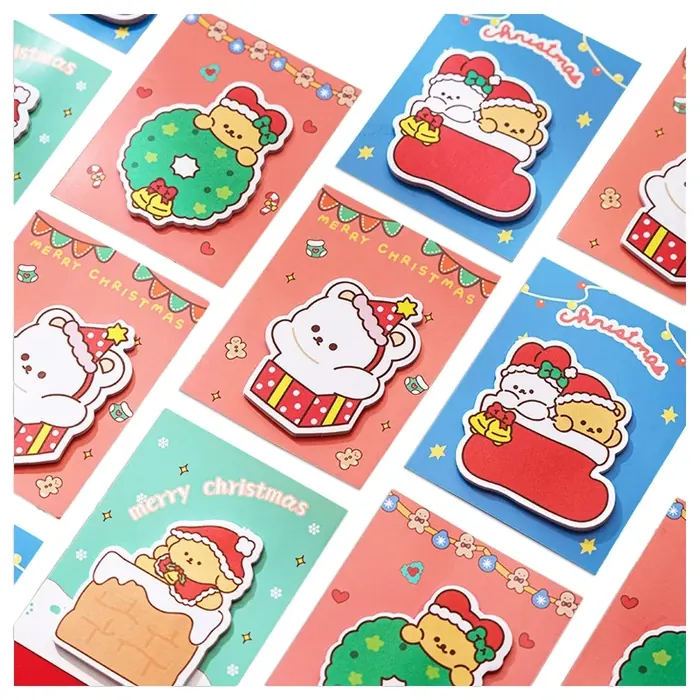
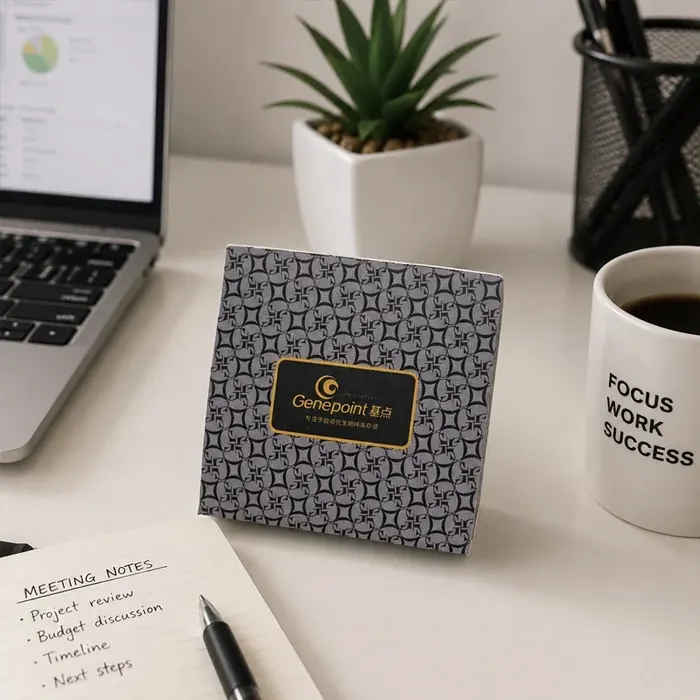
Featured reference designs related to this guide
Frequently Asked Questions
What is the primary technical difference between sticky notes and memo pads?
Sticky notes feature a strip of repositionable, pressure-sensitive micro-sphere adhesive along the top back edge, allowing repeated sticking and peeling without leaving residue. Memo pads have non-adhesive sheets bound together at the top edge with padding compound glue.
Are custom memo pads cheaper to manufacture than custom sticky notes?
Yes. Non-adhesive memo pads require simpler high-speed cutting and cold padding glue, typically yielding 20% to 35% lower unit production costs compared to custom-coated adhesive sticky notes at identical quantities.
What is the standard sheet count for promotional sticky notes vs memo pads?
Sticky note pads are standard at 25, 50, or 100 sheets per pad to prevent adhesive curl. Memo pads commonly range from 50 to 100 sheets for desk notepads, and up to 500 sheets for desktop memo cubes.
Ready to discuss your custom paper product?
Send your artwork files, target dimensions, and quantity requirements to our Dongguan engineering team. We provide rapid digital proofing and formal factory quotations within 24 hours.